

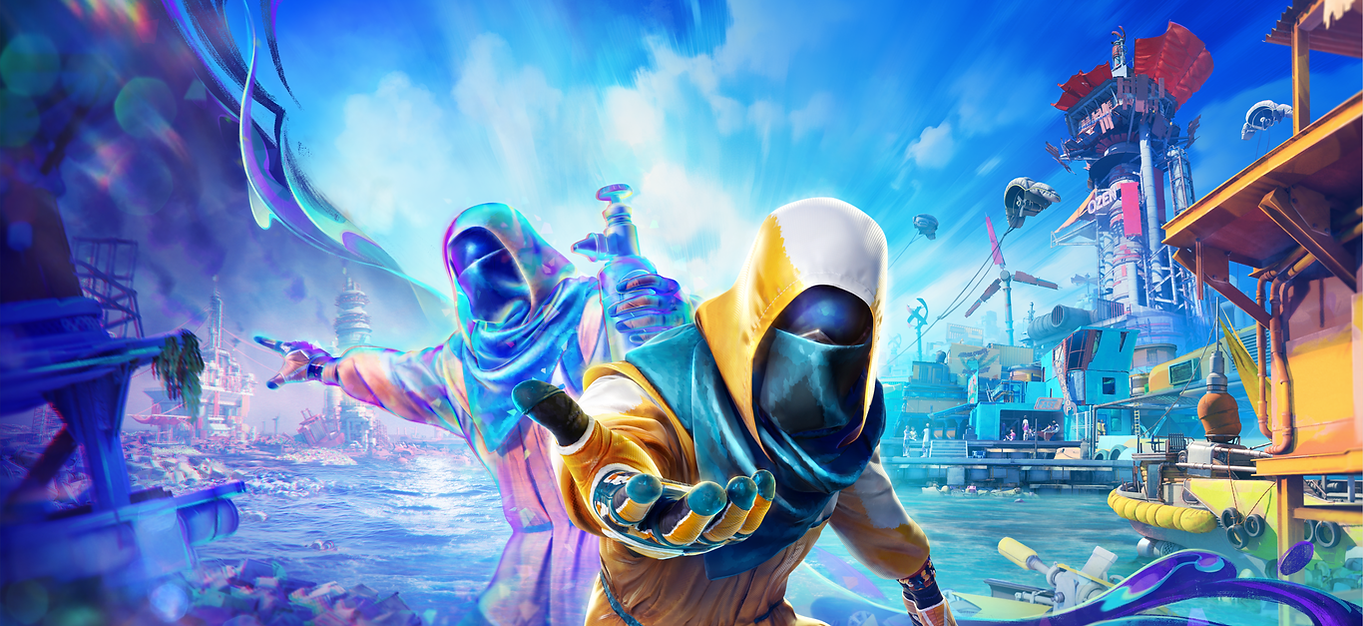

On a submerged and heavily polluted planet, a Tidewalker sets out in search of a cure in a world ravaged by an epidemic. Afflicted by this disease, every decision they make, whether for their own survival or that of others, will shape their story and that of the Tidewalkers who follow them.
Tides of Tomorrow is an asynchronous single-player adventure game in which each player’s decisions influence the story for the following players.
My Work
Narrative Design
-
Contribution to the design of the asynchronous storytelling system
-
Analysis of the initial narrative proposal and identification of limitations while staying true to the creative vision
-
Benchmarking of existing narrative structures
-
Co-design of a narrative tool for story iterations
-
Definition of narrative states, formalization of constraints, and asynchronous design rules
-
Design of narrative prototypes to test new directions
-
Participation in design meetings to guide the system’s evolution
Narrative level design
-
Design narrative levels from scratch
-
Contribute to defining the narrative objectives for each level
-
Designing and prototyping asynchronous gameplay mechanics
-
Collaboratively building the narrative thread, selecting characters suited to each situation, iterating based on playtests, and adjusting the pacing and sequences
-
Writing draft dialogue for prototypes and ensuring that the intended meaning is clear during playtests
Narrative Content
-
Rewrote multiple versions of the story
-
Participated in several writers' rooms with external writers
-
Adapted the narrative to production constraints
-
Developed and wrote in-game lore documents
-
Wrote ambient dialogue, reviewed and approved it with the creative team, and oversaw the creative intent during ambient dialogue recording sessions
Challenge #1: Design a narrative architecture suited to asynchronous storytelling
Why it’s important: Asynchronous storytelling creates a time lag between players that can quickly lead to inconsistencies if the structure isn’t designed to accommodate them.
Method: We defined a narrative state structure, prototyped different ways of organizing situations, experimented with the connections between players’ actions (through story and gameplay), and adjusted the architecture as testing progressed.
Key learnings: The robustness of the structure determines the clarity of the experience, and structuring narrative states is just as important as creating the content itself.
Our lead designer & creative director, Adrien Poncet, gave an excellent presentation on our process during his talk at Game Camp. You can watch the clip on YouTube directly or by following this link.
(Unfortunately, for English speakers, this conference is available only in French.)
Challenge #2: Establish a common language to maintain narrative consistency and enable the team to work together effectively.
Why it’s important: Because multiple disciplines are involved in storytelling and don’t always share the same frame of reference or priorities.
Method: Formalize a shared vocabulary, clarify key concepts, and structure documents to make information more accessible according to each person’s needs.
Key learnings: A shared language improves both collaboration and the quality of the designed system. Categorizing information makes it more actionable and improves the project’s overall clarity.
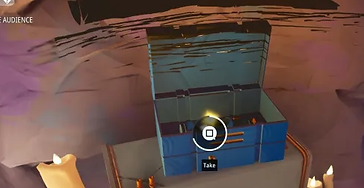
A (standard) box without asynchronous mechanics; however, it responds to other resource management rules.

The async box, on the other hand, is part of an asynchronous resource management system.
Challenge #3: Develop design rules specific to asynchronous storytelling.
Why it’s important: Because real-world constraints only become apparent when ideas are tested in practice, and without rules, each new scenario can undermine the entire system.
Approach: Use prototypes and testing to identify what players do and do not understand, then formalize reusable rules.
Key learnings: Rules emerge from observed situations, not just from intuition. A player needs only the information necessary to understand THEIR situation. Not all changes need to be permanent, and distinguishing between what is temporary and what is lasting is a fundamental rule.
Adrien Poncet (lead designer & creative director)
Arah Collins (writer)
James Nicholls (writer)
Melissa Bennett (writer)
Tristan Hilaire (designer)
Benoit Villain (designer)
Andréa Penz (environment artist)
Ethan Baird (animator)